
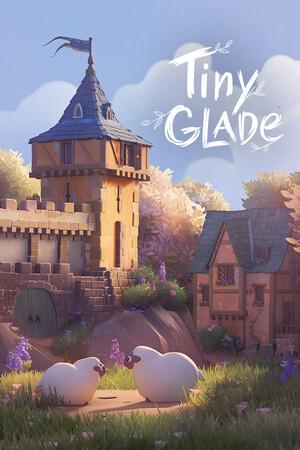
Start with big land shapes first
In Tiny Glade, block out your terrain before you place buildings or props. Use the terrain tool (the ground-shaping brush) to set one main high area, one lower area, and a gentle transition between them. Keep most slopes soft, then add just a couple of steeper spots where you want attention, like behind a house or near a bridge.
A beginner-friendly rule: mostly calm ground, a little variation, and one dramatic feature. If the map starts to feel noisy, zoom out, smooth broad sections, and rebuild one focal slope at a time. That keeps your diorama easy to read from different viewpoints.
Draw paths like real routes
Use paths to connect destinations first: door to gate, gate to courtyard, courtyard to viewpoint. In Tiny Glade, paths usually look more natural with slight curves instead of perfectly straight lines. Make intersections a bit wider so they read as gathering points, and keep side paths narrower so the main route stays clear.
If a path looks forced, redraw the stroke instead of stacking lots of tiny fixes. A clean pass usually looks more natural than over-corrected lines. Place fences, flowers, and other details after the route works, so decoration supports the layout instead of hiding it.
Shape water with shoreline contrast
For natural-looking water, shape the basin (the dipped area that holds water) first, then add water so the edge includes smooth curves and a few uneven sections. Avoid perfect circles unless you want a formal pond. An organic look usually comes from contrast: one bank shallow and soft, another side tighter or a little steeper.
Do one final readability check: terrain, paths, and water should each have a distinct job. If all three compete in one small area, simplify one of them. That cleanup pass is often what makes a Tiny Glade build feel organic and finished.